Science, Online Classes Jennifer Brooks Science, Online Classes Jennifer Brooks

Why Your Kid Might Learn More Science From a Mystery Than a Textbook

Almost no child actually hates science—what they hate is science disconnected from anything they care about. If your student gets glazed eyes when asked "what is surface tension?" but tunes in when asked how forensic science solves a mystery, here is why their brain is wired for problem-solving over abstract facts.
I have been teaching science for over twenty years. I have taught it in private schools, in homeschool co-ops, in 4-H programs, and online. I have taught kids who loved science and kids who were convinced they hated it. I have taught kids who were told they were not science people.

Let me tell you about two of them.

The first was a girl who joined my middle school chemistry class. Her mom warned me upfront: "She hates science. I just want you to know." She was polite. She did the work.

By the end of the semester, she was cornering family members at gatherings to tell them chemistry facts. Not because I asked her to. Because she had found something that clicked and she wanted to share it. She did not become a chemist . She went on to attend a college preparatory high school and found her path there. But something shifted that semester in the way she thoguht about science.

The second was a boy who took my forensic science course. He was good at math, really good, and he knew it. When I asked him what he wanted to do with it, he said: "Not engineering. That sounds boring. Not accounting either. That sounds even more boring." He ended up in forensic accounting.

He found a field that did not exist for him before he started asking questions about how evidence works and how numbers tell stories about real problems. He did not become what he expected to become. He became something that fit the way his brain actually worked.

Here is what I have learned from twenty years of watching this happen: almost no child actually hates science. What they hate is science disconnected from anything they care about.

The question "what is surface tension?" produces glazed eyes. The question "why does a drop of blood form a perfect sphere when it falls through the air — and what does that sphere tell you about where something happened in a room?" produces something completely different.

Same concept. Completely different engagement. Because one question has stakes and one does not.

This is not a gimmick. It is the way learning actually works.

What the Research Says

Educational researchers have a term for this: contextual learning. The idea is simple — students learn and retain information more effectively when it is embedded in a meaningful context rather than presented in isolation.

John Dewey argued for this in the early 1900s. Jerome Bruner's work on narrative and cognition in the 1960s showed that the human brain is fundamentally a story-processing machine. We understand and remember information better when it comes embedded in a narrative structure. More recently, researchers studying STEM education have consistently found that problem-based learning, where students encounter a real problem first, then acquire the knowledge needed to solve it, produces stronger conceptual understanding and longer retention than traditional instruction.

None of this is controversial in educational research. It is, however, still underrepresented in standard curricula — because textbooks are easier to standardize than mysteries.

The Problem With "Just Take Biology"

A standard biology class covers cells, genetics, ecosystems, evolution, and human body systems. These are genuinely important topics. I am not saying never take biology.

What I am saying is that a biology class that covers DNA replication in Chapter 7 between photosynthesis and the cell cycle is asking students to care about something in the abstract, to trust that it will matter someday, without giving them a reason to care about it today.

Some students can do that. Many cannot. And the ones who cannot are not failing because they lack intelligence or curiosity. They are failing because the human brain is not well-designed for learning things in the abstract. It is well-designed for solving problems.

Here is what happens when you teach DNA in the context of forensic investigation:

The student encounters a problem first: a child is found at a bus station with no memory of her name. How do investigators identify her?

That question creates what researchers call cognitive readiness to learn — the brain is primed to receive information because it has a reason to want it. When the lesson then explains what STR loci are, how PCR amplification works, and why 20 matching loci produces a 1-in-1-quadrillion probability, the student is not learning facts in isolation. They are acquiring tools to answer a question they already care about.

The retention difference is significant. The engagement difference is visible in real time.

So what does this actually look like in a real classroom? To see how this philosophy shapes every class I teach, and one notable exception, continue reading here.

Read More
Science, Online Classes Jennifer Brooks Science, Online Classes Jennifer Brooks

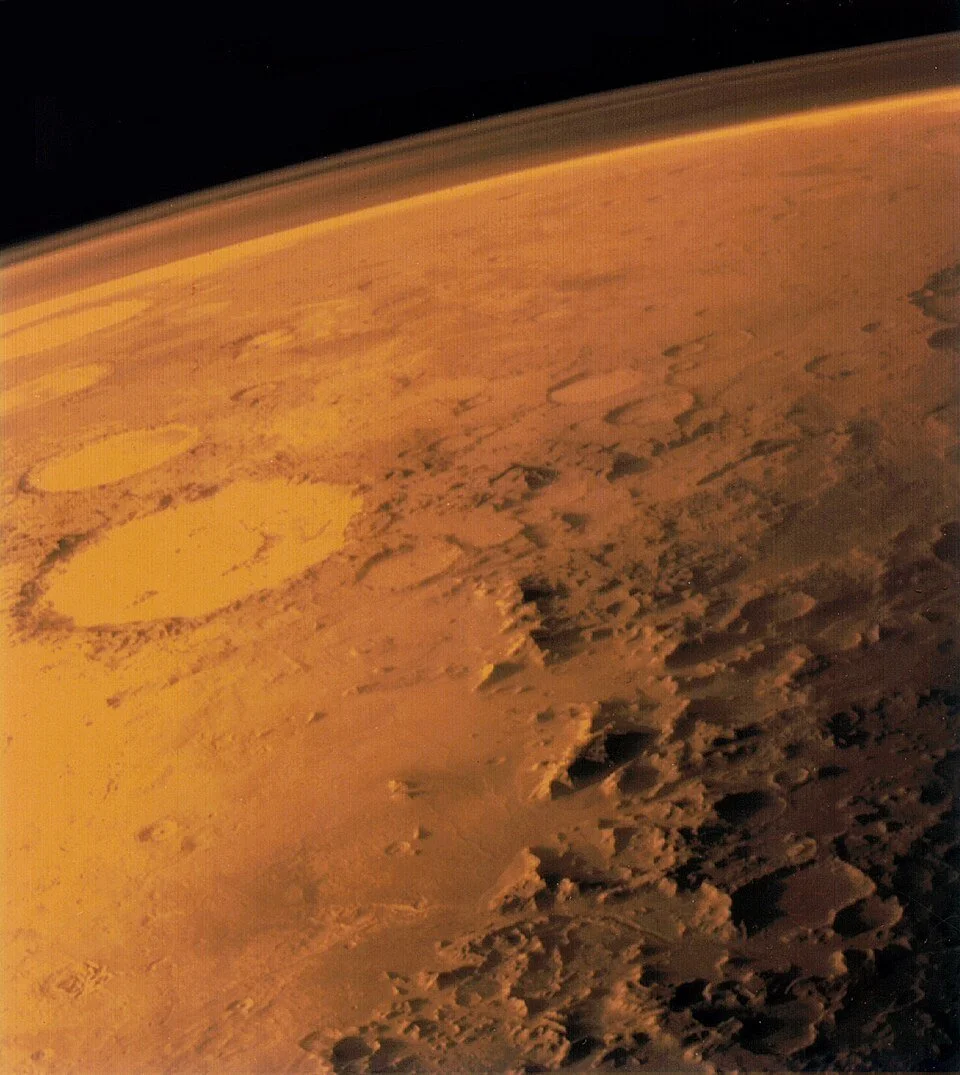
Could You Actually Grow Potatoes on Mars?

If your child got stranded on Mars tomorrow with a bag of potatoes, could they actually grow dinner in the dirt outside their window? We look at what Hollywood got right, what it got dangerously wrong, and how real scientists are solving the Mars food problem.

If you got stranded on Mars tomorrow and someone handed you a bag of potatoes, could you actually grow them in the dirt outside your window?

That's the setup in "The Martian" by Andy Weir. If you've seen the movie, you know the plan: Mars dirt, plus human waste, plus water, equals dinner. It looks almost easy on screen.

It is not easy. Mars soil has a chemistry problem that never even comes up in the movie, and once you know what it is, you won't watch that scene the same way again.

Here's why this isn't just a fun "what if," though. Astronauts on a normal mission eat somewhere around 1.7 to 2.5 kilograms of food a day. Stretch that across a multi-year round trip to Mars and NASA's own estimates put the food alone at close to 3,000 kilograms, per person, if every single bite has to launch from Earth. Multiply that by an actual crew and you've got a rocket that's mostly groceries.

That's the real problem sitting underneath Watney's potato plan. It was never really about potatoes. It's about mass. Every kilogram of food you don't have to launch is a kilogram you can spend on fuel, equipment, or just getting people home safely. Growing food once you get there isn't a nice bonus for a Mars mission, it's one of the only ways a mission like that becomes possible at all.

So did the movie actually solve that problem? Sort of. It got the goal right and the method very wrong.

In this class, my co-teaching robot Watson and I dig into what "The Martian" got right, what it got very wrong, and what real researchers are actually doing right now to solve the Mars food problem for real. (Haven't met Watson yet? He's a real offline robot I built myself. Long story, worth its own post.)

You'll walk away knowing:

  • What's actually toxic about Martian soil, and why it's not what most people guess

  • Why "human waste as fertilizer" is half right and half genuinely risky

  • What plants actually need to grow, and why soil might not even be the important part

  • What real scientists are testing on Earth right now for future Mars missions

This one's a single async class, 25 to 30 minutes, ages 12 to 15.

Grab it here with code JBLOG7510 for a free seat while it's active.

Not ready to enroll yet? Try this first.

You're the first person sent to live on theMars, and it's your job to design a greenhouse that can feed everyone there. Draw it, then think through what you'd need to bring from Earth to build it, and what you'd grow to keep everyone healthy. No right answers required, just curiosity. That and more Mars activities are included in this Mars packet: Download here for free.

Read More